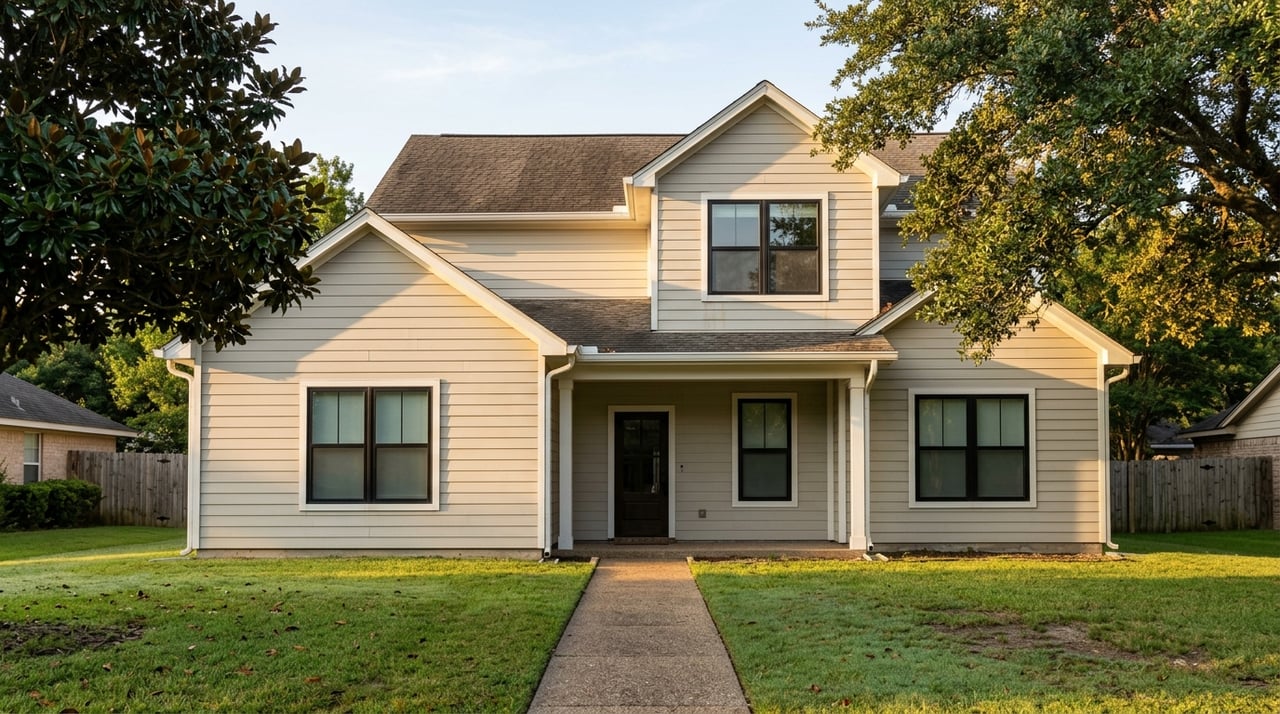
Why St. Augustine Historic District Home Prices Fell in 2026
August 27, 2026
August 27, 2026
If a neighborhood's home prices fall by more than a quarter in a single year, is that a warning sign or a window of opportunity? In most markets the answer is simple: demand dried up. In downtown St. Augustine, the answer is more interesting, and more useful if you're trying to figure out where to buy or how to price a listing this fall.
In June 2026, the historic city district closed 19 home sales, down from 25 the year before, a 24 percent drop in volume. The median closed price fell even further, from $617,500 in June 2025 to $450,000 in June 2026, a 27 percent decline. Days on market crept up from 49 to 55. Meanwhile, St. Johns County as a whole was doing the opposite: 610 closed sales in June 2026, up nearly 25 percent year over year, and 310 pending sales, up 12 percent, with the countywide median holding close to $579,000. Nocatee alone posted 109 closings against 107 the year prior, with another 144 properties pending.
Same county, same month, opposite directions. That split is the story, and the reason for it has almost nothing to do with buyers falling out of love with St. George Street.
A falling median in a historically scarce, high-demand pocket of a growing county is not usually a demand problem. It's a friction problem. Something in the transaction has gotten harder, and that friction is showing up as a lower closing price rather than as fewer buyers walking away entirely. Thirteen homes were still pending in the Historic District at a median list price of $520,000 as of that same June reading, so interest hadn't evaporated. What changed is what a buyer or their lender is willing to absorb once the offer moves past the listing photos.
Three specific frictions explain most of the gap, and each one is worth understanding before you put a historic property under contract or list one.
Florida's homeowners insurance market had a genuinely good year in 2026. Citizens Property Insurance, the state-backed insurer of last resort, cut homeowners multiperil rates by an average of 8.8 percent statewide effective July 1, 2026, its first rate decrease since 2015. Private carriers have started filing reductions of their own. That's real relief, and it applies to St. Johns County along with everywhere else.
What it doesn't do is erase the underwriting gap between a home built to current Florida Building Code and a coquina or masonry structure from the 1920s. New construction in communities like SilverLeaf and Nocatee is engineered for wind uplift from the start: hip roofs, sealed roof decks, impact-rated openings. Those features show up on a wind mitigation inspection as automatic credits, and on a two-year-old build they're usually all present. That's why a new SilverLeaf home often quotes lower to insure than a 1990s house at the beach with twice the wind exposure and an aging roof, even after the statewide rate cut.
Roof age is the sharper edge of that same problem. Many carriers tighten meaningfully once a roof passes 15 to 20 years, and historic homes with original systems can struggle to qualify for a standard policy at all. Coquina walls and lime-mortar construction, common throughout the Historic District, require specialized masonry repair and push replacement cost valuations higher, which is exactly the kind of detail an appraiser and an insurer both notice. In the worst cases, documented asbestos in an older structure can disqualify the home from coverage outright. None of this means historic homes are uninsurable. It means the insurance conversation for a 1920s coquina cottage on Cordova Street looks nothing like the one for a new build off CR-210, and buyers who skip that conversation until after they're under contract are the ones asking for price reductions in week three.
Part of what has historically supported premium pricing in the Historic District is short-term rental income potential. That potential is more locked up than most out-of-state buyers assume. St. Augustine Beach has issued only 100 transient rental licenses for its medium-density residential zones, and every one of them was claimed by 2018. The only way to obtain one today is to buy a property that already carries a license or transfer one from another property you own.
This isn't a recent tightening. Florida's 2011 statewide preemption law bars local governments from banning short-term rentals or regulating rental frequency if they hadn't already done so before June 1, 2011, but it grandfathers in cities that had. St. Augustine is one of those cities, which means its frequency caps and district restrictions have stayed in force through every subsequent legislative attempt to standardize the rules statewide, including a 2024 bill that would have centralized licensing and was vetoed before it ever took effect. A News4Jax report from April 2026 documented how concentrated existing short-term rentals have become on some historic district blocks, with residents describing entire stretches where full-time neighbors are hard to find. For an investor eyeing the Historic District specifically for rental income, that scarcity cuts both ways: existing licenses are worth protecting, but new entry is nearly closed.
Even buyers who clear the insurance and rental hurdles run into a third one at the renovation stage. Much of downtown St. Augustine sits inside a designated historic district where the Historic Architectural Review Board has authority over exterior changes, including roofing material, color, and profile, before work can begin. Clay or cement tile is often required to preserve the Spanish Colonial or Mediterranean Revival character of a home, which is architecturally appropriate but a different cost and timeline than a standard shingle replacement. Combine that with the fact that St. Augustine's own flood hazard documentation puts roughly 90 percent of city residents inside a floodplain, with flooding arriving from peak tides, hurricane storm surge, and overbank rainfall from waterways including the San Sebastian River, Maria Sanchez Lake, and Hospital Creek, and you can see why a straightforward roof-and-move-in plan for a historic property tends to take longer and cost more than the same plan for a newer build ten miles inland. You can check flood zone status for a specific parcel directly through the city's Flood Zone Maps page before you write an offer.
| Submarket | June 2026 vs. June 2025 closings | Median closed price | What's driving it |
|---|---|---|---|
| Historic District (city core) | 19 vs. 25, down 24% | $617,500 to $450,000, down 27% | Roof-age insurance limits, capped short-term rental licenses, HARB review on exterior work |
| Nocatee | 109 vs. 107, roughly flat with 144 pending | Held steady | New-construction wind mitigation credits, no historic-stock friction |
| St. Johns County overall | Up nearly 25% | Roughly $579,000, largely flat | A blend of submarkets moving in different directions at once |
If you're comparing a historic downtown property against a newer home in Nocatee, SilverLeaf, or World Golf Village, the purchase price is the least useful number for judging total cost. Before you get attached to a listing, it's worth working through:
None of these questions have a universally right answer. A coquina cottage with a transferable rental license and a documented recent reroof is a very different asset than one without any of those things, even at an identical list price. That's the actual lesson in the 2026 numbers: the Historic District isn't losing its appeal, it's repricing around who can clear these specific hurdles and who can't.
Does a falling median price in the Historic District mean it's a good time to buy there? It can be, but only if you go in with the insurance and rental license picture already confirmed. A lower closing price often reflects a buyer who negotiated around a real cost, like an aging roof or the absence of a rental license, rather than a discount with no strings attached.
Will the Citizens rate cut lower my quote automatically? Not necessarily. The average statewide decrease applies broadly, but a property's own roof age, construction type, and flood exposure still drive the individual quote. Ask for a property-specific number before you assume the headline rate cut applies to you.
Can I still get a short-term rental license in St. Augustine Beach? Only by purchasing a property that already holds one of the 100 existing medium-density licenses or transferring a license from another property you own. No new licenses are being issued in those zones.
If you're weighing a historic downtown property against new construction elsewhere in St. Johns County, or trying to price a historic listing correctly given where the market actually sits right now, Pamela Hoffman can walk through the specific insurance, rental, and renovation questions that apply to your address before you write or accept an offer. Let's Talk About Your Move.
September 17, 2026
September 10, 2026
September 3, 2026
August 27, 2026
August 20, 2026
August 13, 2026
August 6, 2026
August 6, 2026
July 23, 2026
Pamela Hoffman is a top-performing real estate advisor and licensed broker associate who can expertly guide you through your real estate journey. With over 25 years of sales, leadership, and service experience, Pamela provides exceptional service while also making the real estate process fun.

Pamela Hoffman
One Sotheby's International Realty
820 A1A N Ste E15 Pont Vedra Beach FL, 32082